
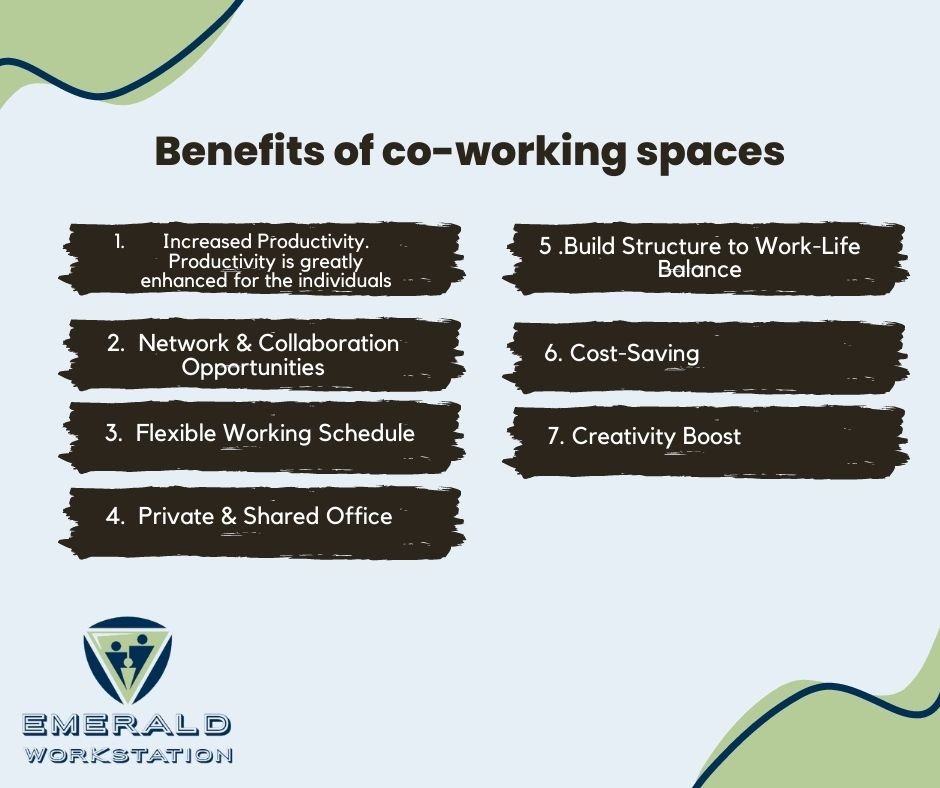
CO-WORKING SPACES BENEFITS
Pros & Cons of Co-working vs. Working from Home
Working from home may initially appear more cost-effective than co-working, however, unlike co-working spaces, it doesn’t come with a receptionist, conference rooms or all the technology you need to run your business. You may also be drawn to the zero-commute that working from home offers, but not separating your office from your home comes with some downsides. You’ll likely be distracted by home projects that need your attention or kids interrupting your workflow. In addition, you won’t have the opportunity to network with like-minded professionals. Accountability is also tougher when working from a home office since you are not surrounded by others whose entrepreneurial drive will inspire yours. It may also be tougher to find work/life balance at home because your office is always accessible.
Pros & Cons of Coworking vs. Working in an Office
Although co-working spaces are increasing in popularity, traditional offices are still the most common type of workplace. They historically provide workers with more structure and discipline, while people working in co-working spaces are responsible for creating their own structured schedule. Also, many team members enjoy the ability to interact and work directly with their peers and supervisors for many reasons including getting clear direction and forming friendships. Working in a traditional office setting can also provide access to perks that wouldn’t be available from a co-working space such as gym classes, free lunches and coworker celebrations including births, birthdays and other milestones. While all of these benefits are wonderful, some people feel smothered by constantly working in the same environment and on the same schedule.
With all the benefits of co-working, it’s no surprise that people who co-work enjoy doing so. In a University of Michigan Co-working Project survey, people who co-work averaged 6 on a 7-point scale in response to questions about “thriving” in the workplace, which was higher than the average for employees who work in regular offices.
SOURCE - oHIVE.